
Some flowers are pretty enough to admire as you walk through the garden. Others make you stop in your tracks and take a closer look.
Echinacea does that to me.
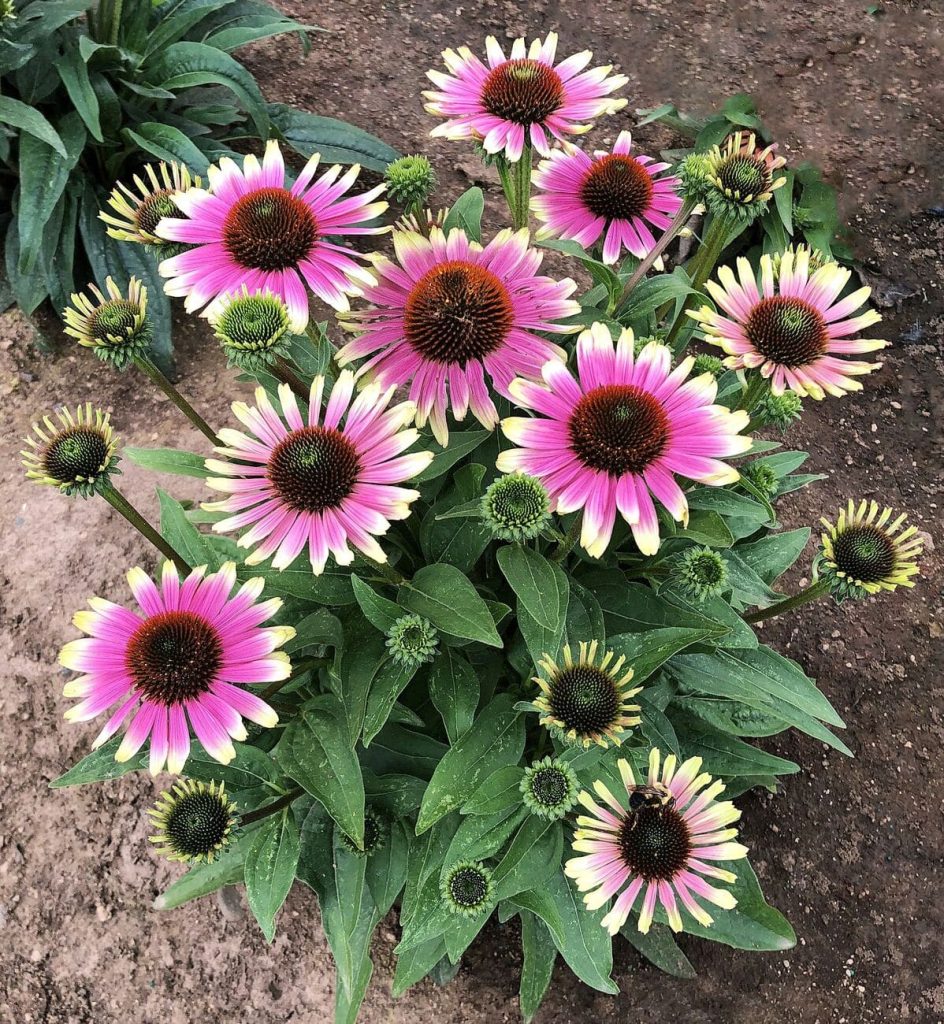
Also known as coneflower, echinacea has distinctive architectural cones surrounded by petals that come in an ever-expanding array of vibrant colors and forms. The flowers are substantial and long-lasting, and there’s something about those prominent cones that invites closer inspection.
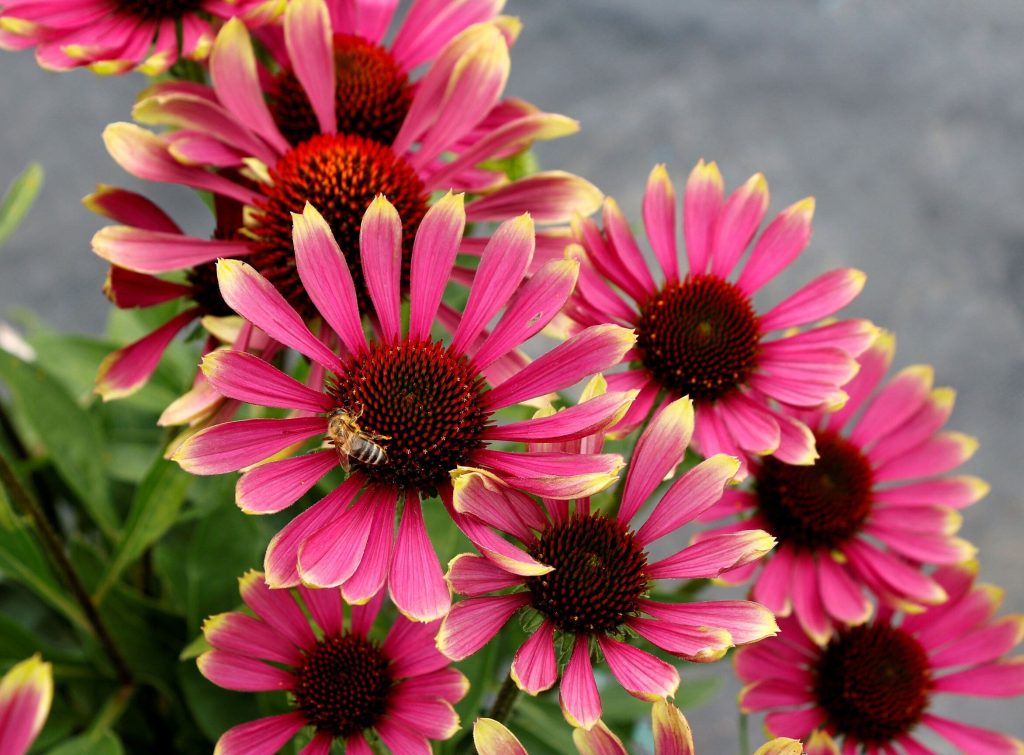
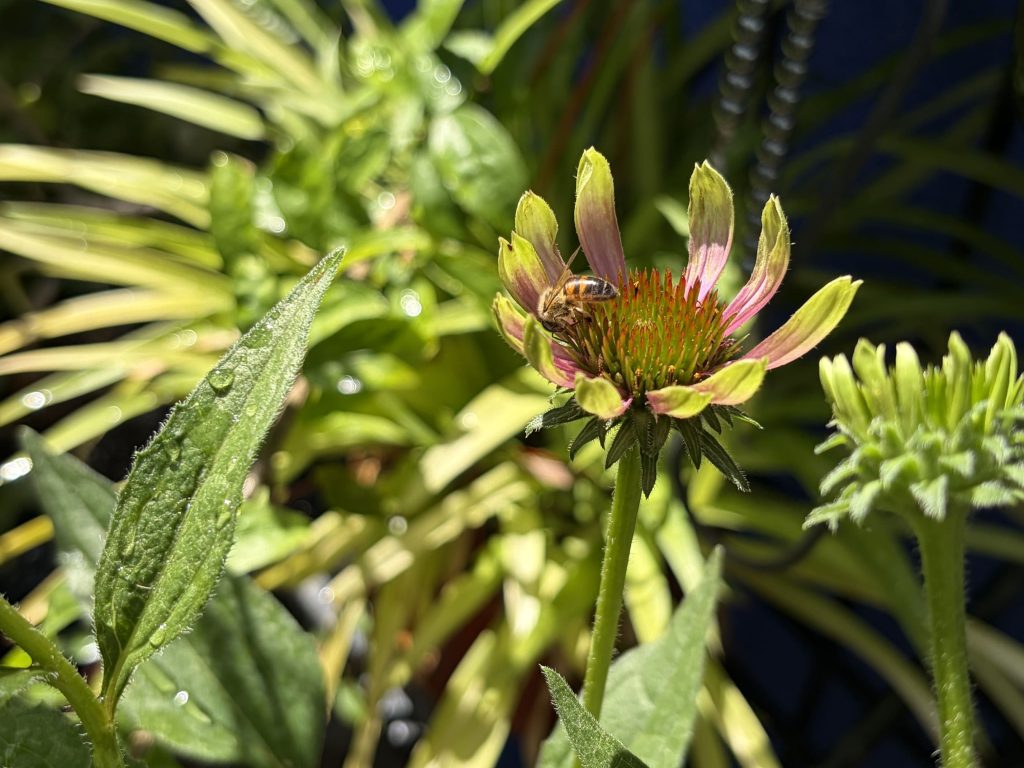
Quite often when I stop to take a look, I discover I’m not the only one admiring the flowers. Butterflies can often be found perched on the blooms, while bees rummage around the cones gathering pollen and nectar. I’ve photographed both enjoying the echinacea in my Southern California garden.
Beyond their good looks, I’ve also come to appreciate just how well echinacea handles our climate. I grow them both in the ground and in containers, and they stand up remarkably well to our hot, dry summer days. Even as we move into fall, several of mine are still flowering.
Made for Summer Heat
It turns out that our summer heat isn’t something echinacea merely tolerates. It’s something the plants appreciate.
“Echinaceas require a good amount of summer heat to thrive and bloom abundantly. Without it, flowering is reduced,” says Chuck Pavlich, Director of New Product Development at Terra Nova Nurseries.
Native to North America, echinacea species developed in areas where hot, dry summer conditions are a normal part of life. Pavlich notes that once established, the plants have impressive drought tolerance and can withstand extended periods of heat and dryness—two conditions Southern California gardeners know well.
That doesn’t mean you can plant an echinacea and forget about watering it, especially when the plant is becoming established. But once it has developed a good root system, it is much better equipped to handle periods of heat and dryness than many flowering perennials.
For the best flowering, plant echinacea in full sun. Some afternoon protection can be helpful in especially intense locations, but too little sun generally means fewer flowers.
Today’s Echinacea Put on Quite a Show
The familiar purple coneflower (Echinacea purpurea) remains a garden classic, but today’s echinacea go far beyond the traditional pinkish-purple blooms.
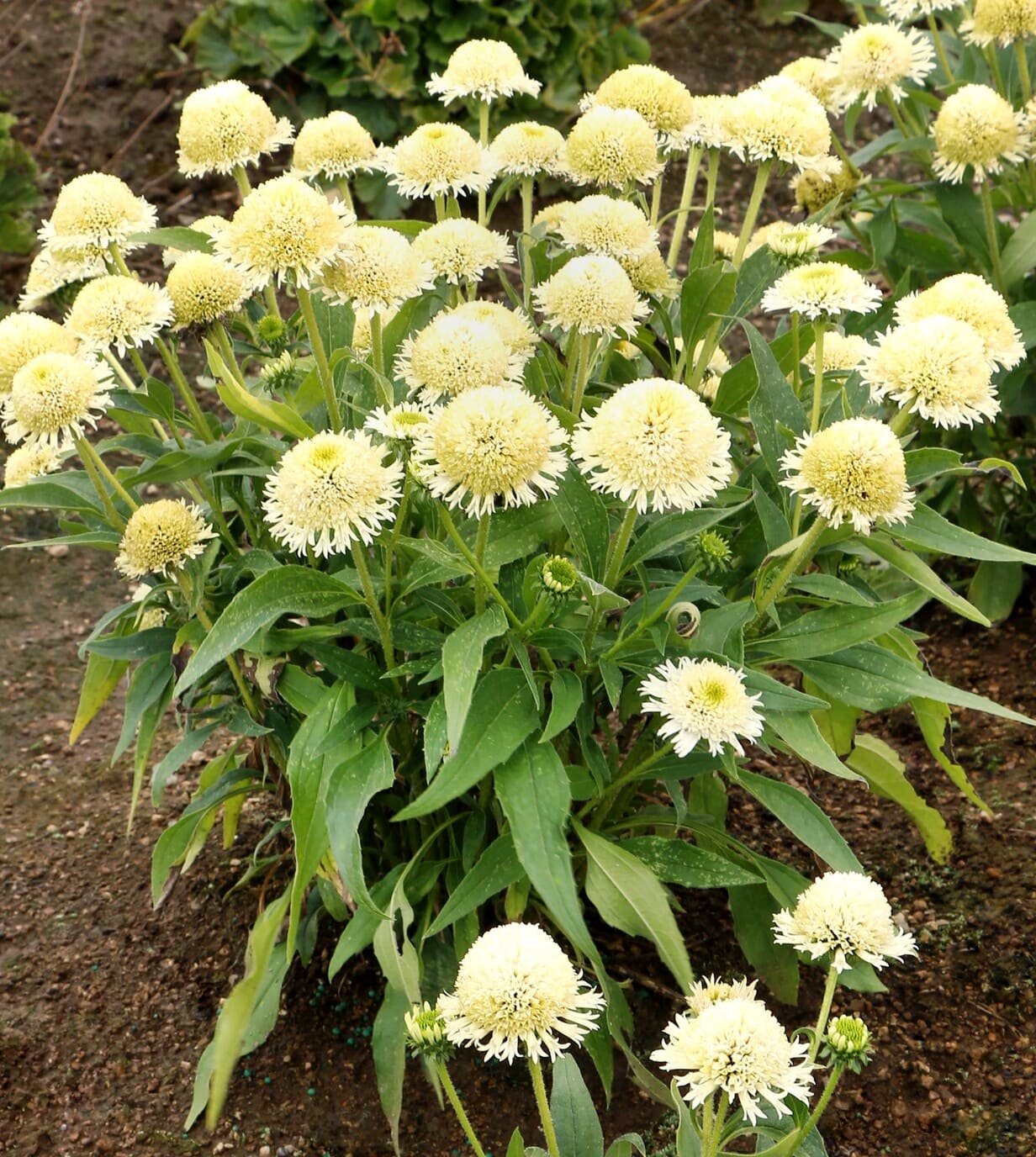
Breeding has brought us an extraordinary assortment of colors, flower shapes and sizes. Terra Nova Nurseries, for instance, offers varieties such as Echinacea PRIMATM ‘Aura’, Echinacea PRINCESSTM ‘Citrus’ and ‘Honey,’ Echinacea ‘French Tips’, DELIGHTFUL™ ‘Lace’ and PRIMA™ ‘Spider’, illustrating just how diverse these plants have become.
No matter the variety, the cone remains the star of the show. It’s what gives the flowers their distinctive appearance and makes them so intriguing viewed up close.
Those cones also help turn the plants into busy feeding stations. “Terra Nova echinacea varieties are exceptional pollinator attractors, drawing numerous genera of bees as well as butterflies, moths, hummingbirds, hoverflies, and other beneficial insects,” says Pavlich. “This makes them a true multi-season ‘cafeteria’ for wildlife.”
I’ve certainly seen that activity in my own garden. One of the pleasures of growing echinacea is stopping to admire a flower and discovering a butterfly has already claimed it, or a bee is busily investigating the cone.
How to Grow Echinacea in Southern California
Despite their rather exotic-looking flowers, echinacea aren’t particularly fussy plants.
“Echinacea perform best in amended, well-drained soil with moderate—not excessive—organic matter,” says Pavlich.
Good drainage is especially important. If you’re gardening in heavy clay, amend the planting area with compost and pumice to improve drainage before planting. Constantly soggy soil can lead to dieback and root rot.
Once plants are established, allow the soil to dry somewhat between waterings. Echinacea appreciates regular moisture when actively growing and flowering, but it shouldn’t remain waterlogged.
Growing Echinacea in Containers
Echinacea also does surprisingly well in containers. I grow several of mine this way, and it’s a good option if you want to enjoy the flowers on a patio or in another sunny area where you don’t have an appropriate planting bed.
Use a high-quality, well-draining potting soil and make certain the container has adequate drainage holes. Because pots dry more quickly than garden soil during hot weather, container-grown plants will generally require more frequent watering during the growing season.
They may also need somewhat more frequent feeding. Pavlich recommends an evenly balanced organic fertilizer or a slow-release conventional fertilizer. An occasional liquid feeding after the first major flush of flowers can help encourage continued blooming.
The equation changes when the plants go dormant during our Southern California winter months. That’s when I pull back considerably on watering my container-grown echinacea. A dormant plant isn’t using water at the same rate as one actively growing and blooming, and keeping the roots too wet can lead to root rot.
During periods of prolonged winter rain, I will even move pots under the eaves where I can control how much water they receive. Then, as new growth emerges from the crown in spring, I resume regular watering and feeding.
Keep the Flowers Coming—or Feed the Birds
Deadheading spent echinacea flowers can encourage the plants to continue flowering, but there’s a good reason not to remove every spent bloom.
“Deadhead spent flowers regularly unless you wish to provide seed heads as a sought-after snack for finches and other birds,” says Pavlich.
I have a lot of birds in my garden, including finches, so I tend to leave some of the flowerheads in place for them. It’s one of those small gardening decisions that allows the garden to provide for wildlife while also giving me another reason to watch what’s happening out there.
You can deadhead some flowers to keep the plant tidy and encourage continued blooming while leaving others to mature into seedheads. That way both you and the birds benefit.
Echinacea also makes an excellent cut flower. The sturdy stems and unusual blooms are striking in arrangements, and the flowers have good staying power after cutting.
A Relatively Trouble-Free Perennial
Another advantage of echinacea is that the plants generally don’t attract a long list of pest problems. Pavlich recommends watching for aphids, leafhoppers, and Eriophyid mites. The latter can inhabit the cone and cause unusual green, warty growth in the flower’s center.
Gophers can also be a problem because they may feed on the roots. Otherwise, good growing conditions—plenty of sun, good drainage and appropriate watering—go a long way toward keeping these plants healthy.
Echinacea’s Long Medicinal History
Echinacea’s appeal extends well beyond the ornamental garden. The plant has a long history of medicinal use. Native Americans used echinacea medicinally for ailments that included respiratory infections, tooth pain and snakebite. In modern times, echinacea has become widely marketed as an herbal supplement, particularly for colds and other respiratory infections.
Research into those uses has produced mixed results, however. Some research suggests that taking echinacea may slightly reduce the likelihood of catching a cold, but it remains unclear whether it shortens a cold once you have one. Different echinacea products also contain different species, plant parts and preparations, making broad claims about their effectiveness difficult.
For gardeners, though, echinacea doesn’t need medicinal benefits to earn its place in the landscape.
A Flower Worth Stopping For
Southern California gardeners are fortunate to have an enormous palette of flowering plants at our disposal, but I’m particularly fond of plants that combine beauty with resilience.
Echinacea does just that. It handles our summer heat and dry conditions, grows in the ground or containers, flowers for a long period and brings an impressive assortment of pollinators into the garden. Then it takes a winter rest before returning from the crown in spring to begin the show again.
And what a show it is. Those architectural cones and vibrant petals still make me stop when I pass them in the garden. Sometimes I go over simply to get a closer look. And when I discover a butterfly perched on a flower or a bee already busily exploring the cone, that’s even better.