
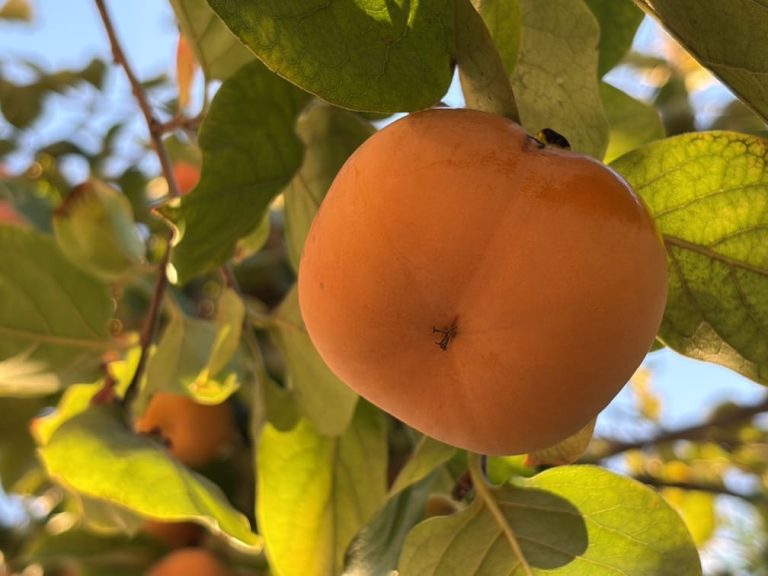
One of the highlights of November in my Southern California garden is harvesting persimmons. Every fall, I look forward to picking the bright orange fruit from my Fuyu persimmon tree and enjoying it fresh. I also dry a good portion of the harvest in my dehydrator. Drying concentrates the fruit’s natural sweetness, creating delicious, chewy treats that have become something of a tradition. Friends and family look forward to receiving my dried persimmons every year.
Persimmons are just one of the delicious fruits that make fall a wonderful season for Southern California gardeners.
Thanks to our mild Mediterranean climate and abundant sunshine, we can grow a wide variety of fruit trees that provide harvests throughout the year. And while spring and summer often get most of the attention when it comes to homegrown fruit, autumn has plenty to offer.
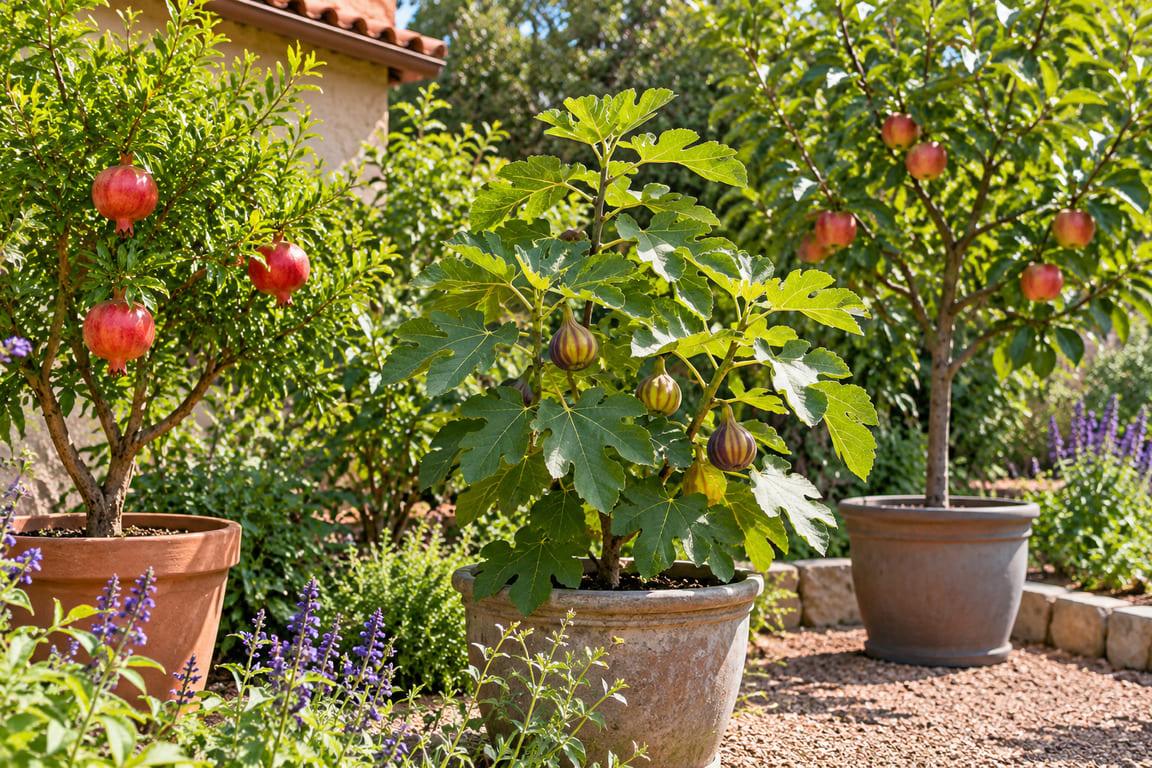
From persimmons and pomegranates to late-season figs and apples, there’s something especially satisfying about stepping into the garden and picking fruit at its peak of ripeness.
And let’s face it. Some of that fruit never even makes it into the kitchen.
Fall Fruit Trees in Southern California: Persimmons, Pomegranates, Figs and Apples
One of the biggest advantages of growing your own fruit is being able to harvest it when it’s fully ripe. Homegrown varieties often have a depth of flavor that’s difficult to find in supermarket fruit, which is often picked early to withstand shipping and storage.
You can also grow unusual varieties in your garden that aren’t widely available commercially.
Here are four fruit trees that can provide delicious fall harvests in Southern California.
Persimmon
We may not have the traditional confetti of jewel-toned autumn leaves in Southern California, but we do have persimmons. Every fall, these bright orange fruits light up the garden. With some varieties, the leaves drop while the fruit remains on the branches, creating the charming appearance of little orange pumpkins hanging from the tree.
Two popular varieties are ‘Fuyu’ and ‘Hachiya.’
‘Fuyu’ is a non-astringent persimmon that can be eaten while still firm and crisp, making it ideal for fresh eating. As it softens, the fruit becomes sweeter and more tender. This is the variety I grow in my garden.
‘Hachiya’ is an astringent variety that must become completely soft before eating. When fully ripe, its rich, almost jelly-like flesh is delicious fresh and works beautifully in baked goods.
Fully ripe ‘Hachiya’ persimmons also make excellent fruit leather, thanks to their soft, sweet flesh. I make fruit leather with very ripe ‘Fuyu’ persimmons as well. Using a dehydrator, you can make both fruit leather and dried persimmon slices. Each method concentrates the fruit’s natural sweetness and provide delicious ways to enjoy the harvest long after the season ends, as well as make sure no fruit goes to waste.
Persimmon trees are generally self-fruitful, meaning a single tree can produce fruit without another variety nearby for pollination.
Pomegranate
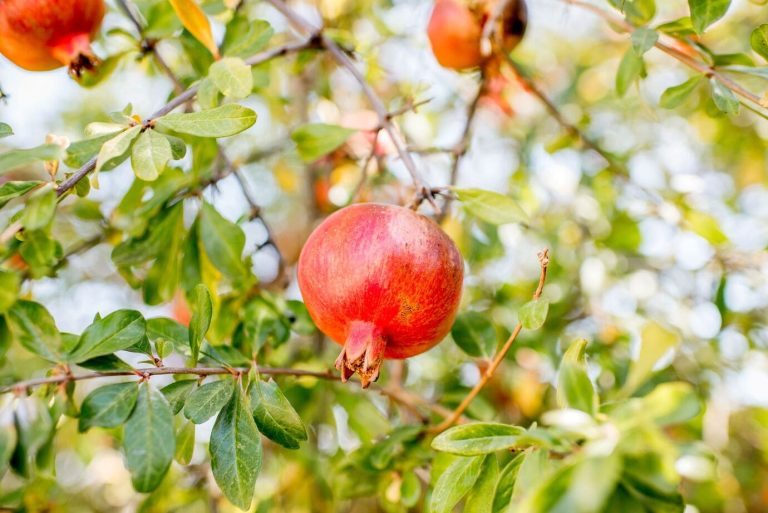
Few fruits feel as festive as the pomegranate. This ornamental tree does double duty in the garden, first producing eye-catching flowers in spring, followed by jewel-toned fruit in fall.
Crack open the fruit’s tough outer skin, and you’ll discover clusters of juicy, ruby-red arils, each containing a seed. Their sweet-tart flavor makes pomegranates wonderful for fresh eating, salads, juices, and other culinary uses.
The tree itself is equally appealing. Pomegranates have attractive foliage, tolerate heat and drought once established, and are generally easy to grow in Southern California. They’re deciduous, although in particularly mild, protected locations they may retain some foliage well into winter.
Popular varieties for Southern California include ‘Wonderful’, known for its richly colored fruit and tangy flavor, along with ‘Ambrosia’, prized for its large, sweet fruit, and ‘Ruby Red,’ another appealing selection with richly colored arils.
Pomegranates are also well suited to smaller gardens and containers, where they can be grown as multi-trunked shrubs or trained into small trees.
Fig
Among the oldest cultivated fruits, figs are perfectly at home in Southern California’s Mediterranean climate.
Although the main fig harvest generally occurs in summer, some varieties continue producing into fall, particularly during warm autumn weather. These late-season figs are a welcome treat as the growing season winds down. There’s nothing quite like a fully ripe fig picked straight from the tree. The soft flesh and rich, honeyed sweetness are difficult to duplicate in commercially harvested fruit.
Once established, fig trees are productive and relatively low maintenance. Their attractive, spreading growth habit adds character to the landscape. They also adapt well to smaller spaces. With appropriate pruning, figs can be grown in large containers or trained against a wall using espalier techniques.
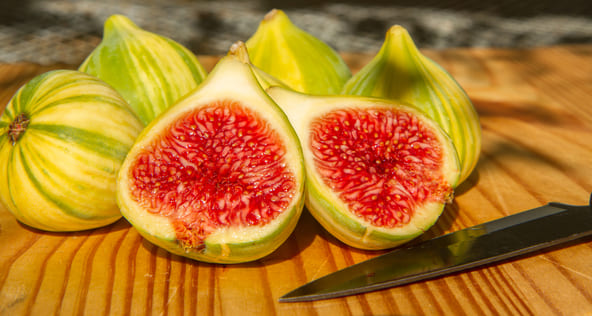
Popular varieties for Southern California include ‘Black Mission’, known for its dark skin and richly flavored flesh, and ‘Brown Turkey’, another widely grown selection. For a later harvest, consider ‘Panachée’, also known as Tiger Fig, which produces distinctive yellow-and-green striped fruit with sweet, strawberry-red flesh. In favorable Southern California conditions, its late-ripening crop can extend into fall.
For the best fall harvest, choose a variety suited to your location and growing season. Keep in mind that the timing and size of the crop can vary depending on weather and growing conditions.
Apple
Nothing says fall quite like a crisp, juicy apple. And although apples are often associated with colder climates, Southern California gardeners can grow many varieties successfully.
I have a Fuji apple tree in my garden, and this year I had a particularly good harvest. That’s one of the interesting things about growing fruit trees here—harvest timing can vary from year to year depending on weather and other growing conditions.
The key to successful apple growing is choosing varieties suited to our relatively mild winters. Apple trees require a certain amount of winter chilling to develop and bloom normally. The number of chill hours varies by variety, and Southern California’s coastal, inland and foothill microclimates can differ considerably.
In Southern California’s mild winters, it’s essential to choose low-chill varieties. Not doing so can result in very little to no fruit production. Good choices included ‘Fuji,’ ‘Anna,’ and ‘Dorsett Golden.’
Some apple varieties are self-fruitful or partially self-fruitful, while others require a compatible second variety for cross-pollination. Even self-fruitful trees may produce better crops with a suitable pollination partner.
Before planting an apple tree, check both its chill requirements and pollination needs.
Tips for Growing Fall Fruit Trees in Southern California
Whether you’re planning a small backyard orchard or adding a single fruit tree to your garden, a little preparation goes a long way toward successful harvests.
Choose the Right Variety for Your Microclimate
Southern California includes a wide range of growing conditions, from cool coastal areas to hot inland valleys and foothills. A fruit tree that performs beautifully in one location may not be the best choice for another.
For apples, as mentioned, winter chill requirements are especially important. To help you choose the right variety, consult the UC Davis Chill Calculator for your area, which will give you historic data on chill hours in your area. When in doubt, opt for the lowest chill fruit tree available. And if the tree isn’t labeled, don’t assume it is an ideal variety for the SoCal area.
Persimmons, pomegranates, and figs have different climatic requirements, and many varieties perform well in our relatively mild winters.
Before purchasing a tree, consider your location, available space, summer temperatures, and the variety’s specific growing requirements.
Provide Plenty of Sun and Good Drainage
Most fruit trees produce best in full sun, generally at least six to eight hours daily.
Choose a location with well-draining soil and sufficient room for the tree’s mature size. Good air circulation is also important for maintaining healthy foliage and reducing disease problems.
If space is limited, consider varieties suitable for containers or trees that can be maintained at a smaller size through pruning.
Water Consistently While Trees Establish
Newly planted fruit trees require regular watering while developing their root systems. How often you water depends on the weather, soil type, tree size, and planting location. Rather than following a rigid schedule, monitor soil moisture and water deeply enough to encourage roots to grow into the surrounding soil.
During rainy weather, don’t assume that rainfall has provided sufficient moisture. Check the soil to make sure water has penetrated at least five to six inches deep. If the soil remains dry below the surface, supplemental watering may be necessary.
Established trees may tolerate periods of dryness, but consistent moisture during active growth and fruit development is important for good production. On the flipside, avoid overwatering and creating waterlogged soil.
Mulch to Protect Roots and Conserve Moisture
Mulching is one of the simplest ways to improve growing conditions for fruit trees. Apply a layer of organic mulch around the tree, extending toward the drip line when possible. Keep mulch several inches away from the trunk to prevent moisture buildup against the bark.
Mulch helps moderate soil temperatures, conserve moisture, and support beneficial soil organisms as it decomposes.
Fertilize According to the Tree’s Needs
Fruit trees benefit from appropriate nutrition, but their fertilizing requirements vary by species, age, soil conditions, and growth.
Spring is generally an important time to fertilize as trees begin active growth. However, avoid assuming every fruit tree needs the same fertilizer or feeding schedule. Excessive fertilization, particularly nitrogen, can encourage leafy growth at the expense of fruit production.
Enjoy the Fruits of Fall
One of the pleasures of gardening in Southern California is that the harvest doesn’t end when summer does.
Persimmons, pomegranates, late-season figs and apples bring their own colors, flavors, and rewards to the autumn garden.
For me, nothing quite captures the season like gathering persimmons from my tree, eating some fresh, and drying the rest to share. It’s a tradition that begins in the garden and continues when I give those sweet treats to people who look forward to them every year.
And that’s one of the best things about growing fruit. The harvest isn’t just something to eat. It’s something to share.
If you’d like to grow these fruit trees in your own garden, my book, Southern California Fruit Gardening, covers everything you need to know about choosing, planting, caring for, and harvesting delicious fruit from these trees and many more. It also identifies the best varieties for Southern California, including low-chill selections suited to our mild winters.