
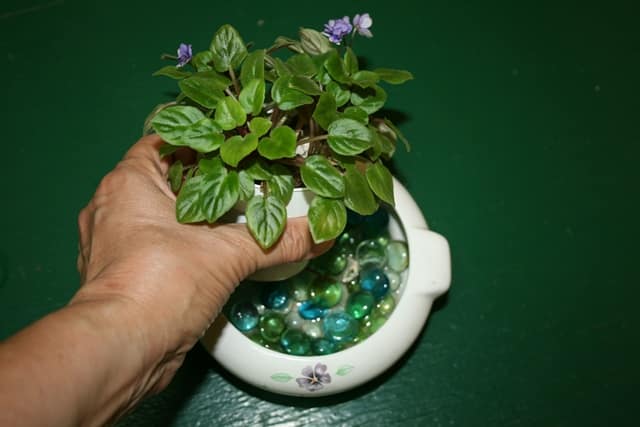
Now that cool weather has set in and heaters are turning on and drying out your indoor air, chances are your plants are experiencing low humidity and the problems that come with lack of moisture in the air.
If your houseplant foliage is curling and experiencing brown leaf tips or dropping, you may have an insufficient humidity level. Many houseplants come from the jungle where the air is heavy with humidity. Heaters and cold, dry weather tend to suck the moisture out of indoor air. Many houseplants will survive in dry air, but they do much better with additional humidity. Some indoor plants suffer more than others when the air is parched, such as orchids, fittonia, anthurium, African violets and peace lily. To ensure that your houseplants have sufficient humidity, keep the following tips in mind. Test the humidity levels in your home. A hygrometer or humidity meter is an instrument that measures the moisture level in your indoor air. You want the humidity level to be at least 45 percent for the health of most houseplants. The humidity in your home depends on a variety of factors, such as where you live. Coastal homes tend to be more humid than those that are inland and certain states are much more humid than others. If you discover that your humidity level is lower than 45 percent in your home, in order to have healthy houseplants, you want to provide additional humidity. Here are three ways to do that. You can try one way or all simultaneously. Mist. Except for fuzzy-leaved plants like African violets, houseplants do well with regular misting, which humidifies the air around plants and can discourage certain plants, like spider mites. Use a spray bottle that delivers a fine mist and filtered or bottled water, as it is less likely to cause water spotting on the foliage. If possible, mist at least once a day, as the effects tend to be short-lived. Use a humidity tray: Placing plants above water causes a situation where the water evaporates and simultaneously humidifies the surrounding air. To create a humidity tray, fill a waterproof bowl with gravel or marbles. Add water to the container, stopping when the water level is just below the surface of the gravel or marbles. Place the plant on top, ensuring that the bottom of the pot doesn’t sit on water, as this can lead to root rot.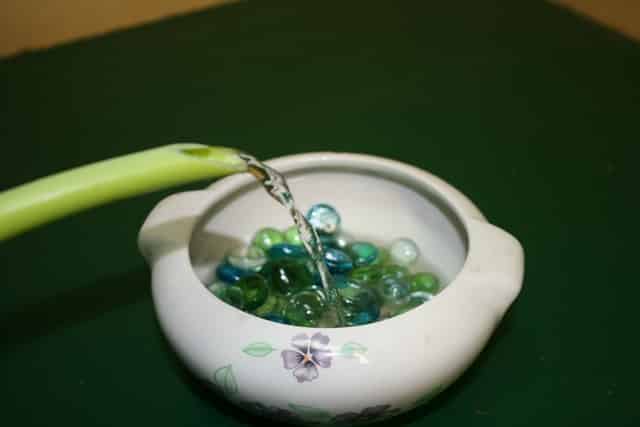 Humidity tray (Julie Bawden-Davis)