
When gardeners ask me to recommend a flowering vine that provides months of color with relatively little fuss, mandevilla is always near the top of my list.
In fact, it is one of my favorite flowering vines for the Southern California garden. With its glossy green foliage and large trumpet-shaped blooms in shades of pink, red, and white, mandevilla creates a tropical feel while thriving in our Mediterranean climate.
What I love most about mandevilla is its reliability. While many flowering plants have a short bloom period, mandevilla flowers over an extended season. Peak bloom occurs from spring through fall, but in many Southern California gardens, the vine continues producing flowers well beyond that period.
Why Mandevilla Thrives in Southern California
Native to Brazil, mandevilla loves warmth and sunshine, making it well suited to many Southern California gardens.
Although it appreciates protection from frost, once established, it handles summer heat remarkably well. A location that receives morning sun and some afternoon protection is ideal, though many gardeners successfully grow mandevilla in full sun.
The vine’s glossy foliage remains attractive even when bloom production slows, making it a valuable landscape plant throughout the year.
A Vine for Almost Any Garden Style
One of the reasons I recommend mandevilla so often is its versatility.
Depending on the variety and how it is grown, mandevilla can serve many purposes in the landscape:
- Train it on a trellis or arbor
- Grow it against a fence or wall
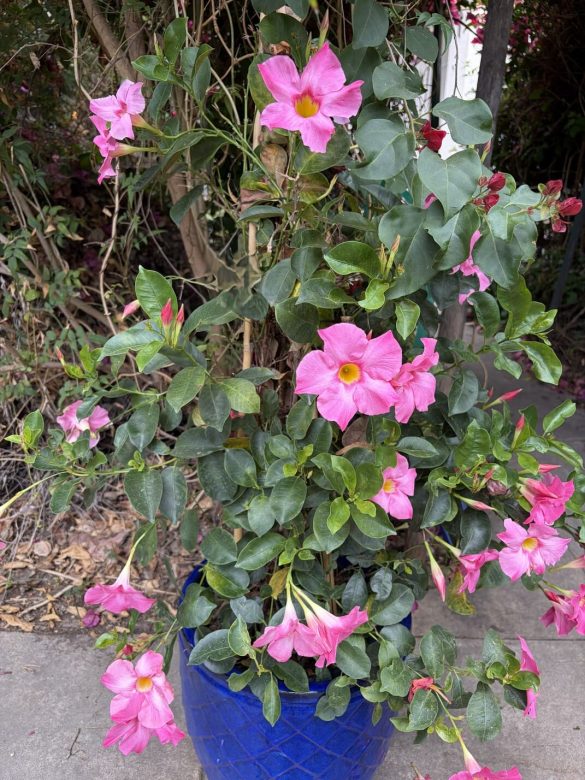
- Feature it as a focal point in a decorative container
- Use compact varieties in hanging baskets
- Add it to patios and outdoor living spaces
In containers, mandevilla generally stays smaller and more manageable than plants grown in the ground.
Beautiful Flower Colors
Mandevilla is available in a range of flower colors.
Pink varieties remain the most common and are among the most striking, producing masses of vibrant blooms throughout the warm season.
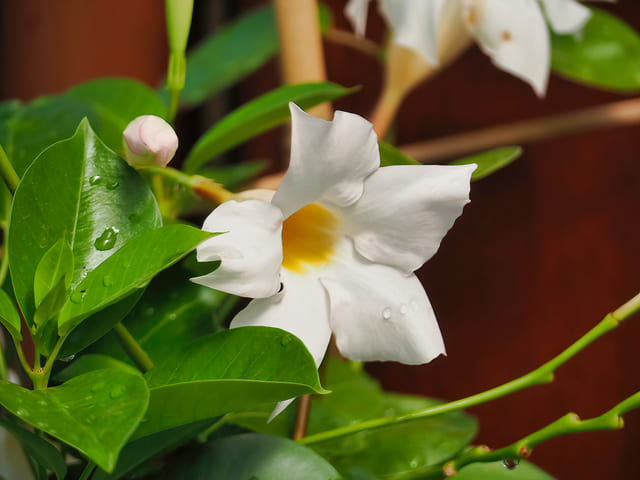
White-flowering varieties are particularly special. I enjoy using them in areas that can be viewed in the evening, as the blooms glow in the fading light. They make excellent additions to moon gardens and other nighttime landscapes.
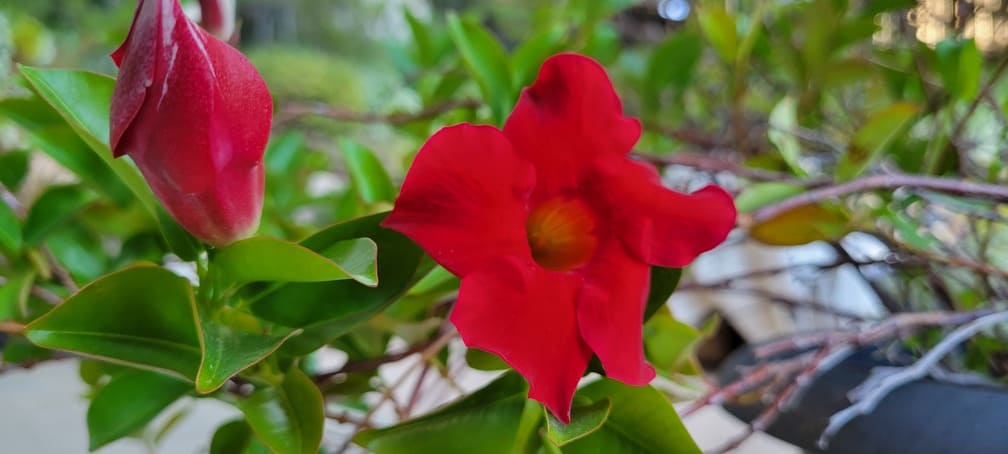
Red varieties add bold tropical color and pair beautifully with other summer-flowering plants.
Growing Mandevilla Successfully
Fortunately, mandevilla is not difficult to grow when its basic needs are met.
Provide Good Drainage
Excellent drainage is essential. Like many warm-climate plants, mandevilla dislikes sitting in wet soil, especially during cooler weather.
If planting in the ground, amend with compost and pumice and consider planting slightly high if drainage is questionable.
Water Consistently
Mandevilla prefers evenly moist soil but not constantly wet conditions. Allow the top layer of soil to dry slightly between waterings.
Feed for Continuous Bloom
Because mandevilla flowers on new growth, regular feeding helps maintain a steady display of blooms. An all-purpose, organic fertilizer applied during the growing season encourages vigorous growth and flowering.
Provide Support
Most varieties benefit from a trellis, stake, arbor, or other structure for climbing. Even when grown as a shrubby plant, some support often improves appearance and bloom display.
A Long-Lasting Garden Favorite
Many flowering plants come and go in the garden, but mandevilla has earned a permanent place in mine.
Between its long bloom season, glossy foliage, ease of care, and versatility, it provides tremendous value in the landscape. Whether grown in a container on the patio, climbing a trellis, or spilling from a hanging basket, mandevilla delivers months of dependable beauty.
If you’re looking for a vine that combines tropical charm with Southern California durability, it’s hard to beat mandevilla.