
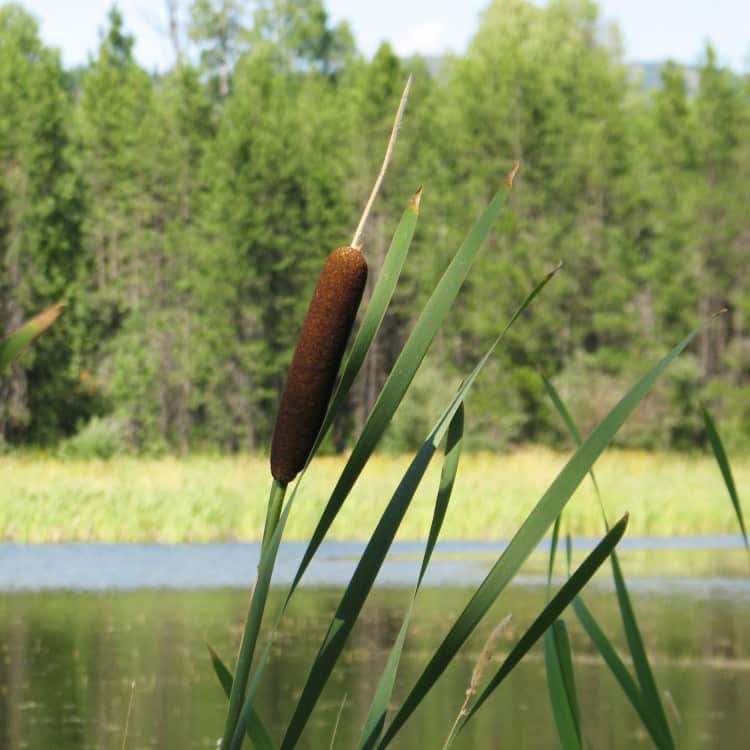
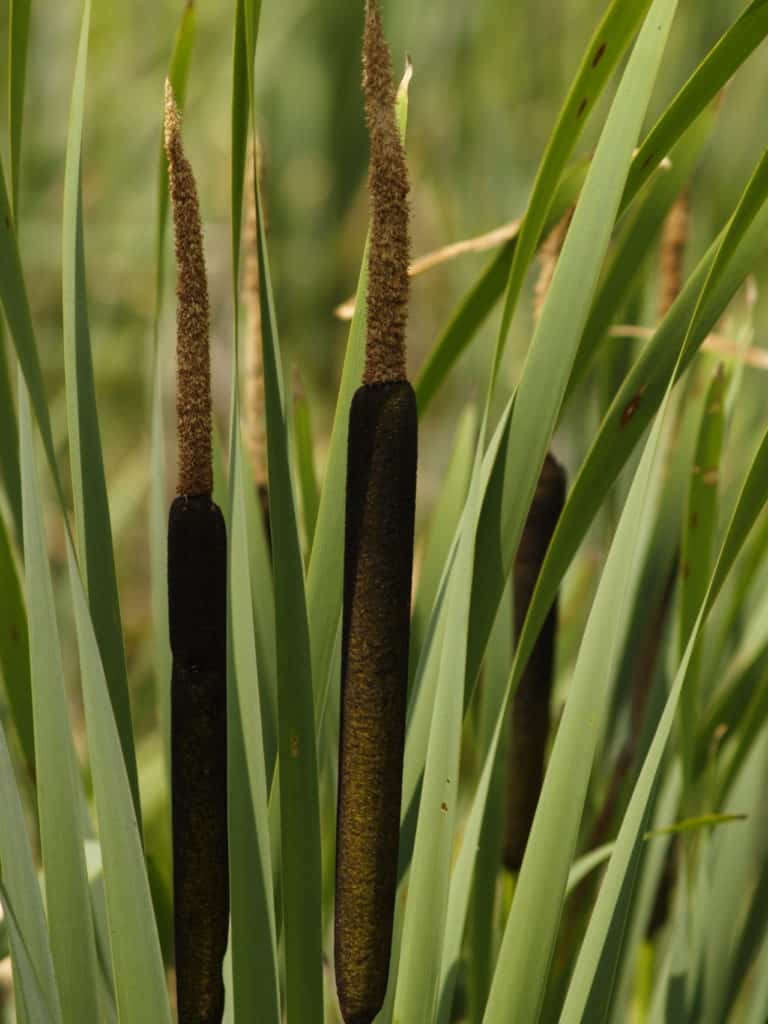
If you have a water feature in your garden, such as a pond or bog, cattails (Typha latifolia and T. angustifolia) make an eye-catching addition. Their sword-like leaves and brown inflorescences, which actually resemble cat tails, offer a unique architectural element to the landscape. The “tails” of these plants also provide nutrient rich food for birds, bees and other animals, as well as nesting materials.
Featuring a dense root system, cattails can be used to prevent shore erosion on lakes and small ponds. These plants also do a good job of filtering toxins out of water, and they have nitrogen-fixing bacteria in their roots, which means they absorb this important nutrient and then redistribute it to surrounding soil. Once established, cattails can spread quickly via rhizomes (spreading roots), as well as seed. While this may be something you want if you have a large pond, their tendency to readily propagate may not be a good thing if you have small water feature or bog. The good news is that you can contain cattails very easily by growing them in pots and cutting off the seed heads before they distribute themselves in the fall.
(Michael Tschauder/FreeImages.com)
Plant in soil from the water garden or similar soil. Cattails do best in heavy clay-loam soil, rather than potting soil, which is too lightweight and tends to float out of the pot and into surrounding water. Once planted, submerge the pot up to the rim in the water garden.
Fertilize once in early spring. Use a well-balanced organic fertilizer designed for water gardens. The plants will remove the nutrients they need from the water garden for the rest of the season.
Divide occasionally. Once every two to three years, remove the cattails from the container and divide the rhizomes by cutting through them with a knife. Repot the new plant sections in their own containers.
Julie Bawden-Davis is a garden writer and master gardener, who since 1985 has written for publications such as Organic Gardening, Wildflower, Better Homes and Gardens and The Los Angeles Times. She is the author of seven books, including Reader’s Digest Flower Gardening, Fairy Gardening, The Strawberry Story, and Indoor Gardening the Organic Way, and is the founder of HealthyHouseplants.com.